

How can I treat crepey skin with skincare?
SPF
The number one skincare product for your crepey skin-tackling toolkit – for faces, hands and necks is sun protection. UV radiation from the sun is a major contributor to premature ageing and the development of crepey skin, so wear a broad-spectrum SPF every day. You also want to protect your skin if you are also using sun sensitising ingredients such as chemical exfoliants and retinoids within your crepey skin-busting routine.
Chemical exfoliants (AHAs)
Bumpiness or uneven texture may also accompany crepiness and make it appear worse. If so, try using exfoliating products, including chemical AHAs to buff away dead skin cells and stimulate cell turnover. I’d use a hydroxy acid cleanser or toner on my face and neck (plus your hands if they are a niggle area) to remove the outermost skin cells. Not only does this make the skin appear fresher, but it allows subsequently-applied treatment products to sink more deeply and evenly into the skin now that they’re not fighting their way past extra layers of dead skin cells. Start gently, remembering that the skin in thinner areas such as the neck may react differently, and may just react more, to products than the skin on your face.
Retinoids
Retinoids are a great idea for helping to combat crepey skin. They can help to regenerate the skin by producing more collagen fibres and improving skin elasticity. Retinol also inhibits the action of enzymes called matrix metalloproteinases (MMPs), which break down collagen fibres, and increases production of TIMPs – the enzymes that inhibit MMPs. Retinoids can also increase deposition of glycosaminoglycans (hydrating molecules like hyaluronic acid) in the skin, so they can be hydrating – although don’t overdo them, or they’ll conversely dry the skin out through the irritation they cause and the huge reduction in oil production that they bring about. NB – go more slowly with retinoids on your neck than on your face. They are helpful but neck skin has less natural hydration than your facial skin, so gently does it.
Hydrators
You can use a hydrating serum to boost your skin’s hydration so that it can stay firmer and sag less, as well as reducing the rate at which the skin becomes even more crepey. Plumping the skin up also makes it look firmer and fresher. Great for crepey skin on the face, the neck and the decolletage. Pairing this with a good moisturiser will seal hydration into the skin and also seal the serums that you’ve just used. It’s so important to keep the skin well hydrated if you want it to be firmer and less crepey.
Other serums
I’d strongly recommend using some type of antioxidant serum, like a vitamin C serum, to freshen the skin, protect it against environmental damage that could age it further, and boost collagen production in the skin to firm it up that bit further. Using a peptide serum can also boost collagen production (matrixyl 3000 is a good peptide for this) and firm the skin up. Look up what the specific peptides you’re considering investing in do before buying – peptides are very wide-ranging in what they can accomplish and are focussed on.
Can supplements help with my crepey skin?
Yes, they absolutely can, if they have a good enough delivery system.
Vitamin C
Altrient C, which we sell on our website, has a patented liposomal delivery system which allows the vitamin C to be delivered to your gut without being destroyed by stomach acids and made significantly less efficient – Altrient C has an absorption rate of up to 98%, whereas it’s 10-20% for your average vitamin C.
Vitamin C has very impressive results on skin health. In an experiment I conducted a few years ago – where I stopped all other forms of skincare other than continuing to use a basic moisturiser at night and a sunscreen during the day – I saw a 22.8% improvement in my collagen levels and 64.3% improvement in my skin elasticity (both of which help to combat wrinkling and sagging skin) and a 30.2% increase in hydration, which both reduces the speed at which the skin ages and reduces any crepey, wrinkled appearance. And that was without using skincare, tweakments or home use devices. If you’re interested in supplements, this is well worth a go.
Collagen supplements
Yes – in my opinion, it could be worth trying one of the collagen supplements that has decent data to show that it can improve the firmness and elasticity of the skin from the inside out. Totally Derma is a collagen supplement, but unlike other collagen supplements it also contains a patented, therapeutic dose of hyaluronic acid, for hydration, and five key antioxidants including green tea extract and grape seed extract. The supplement is great for all-round health (including benefiting gut health) but also prompts your skin to make more collagen, so that it’s firmer and thicker and less likely to sag and wrinkle, as crepey skin is wont to do. There’s a whole factsheet on collagen supplements here.
Can at-home devices help with crepey skin?
At-home microcurrent devices and LED masks may provide a little improvement to crepey skin, due to their stimulation of collagen production. However, you’re likely to have to wait a long time to see results as they aren’t nearly as powerful as the technologies practitioners have in clinic, so you might be better off, if you have the budget, treating yourself to a professional treatment.
How much, on average, would treating crepey skin cost?
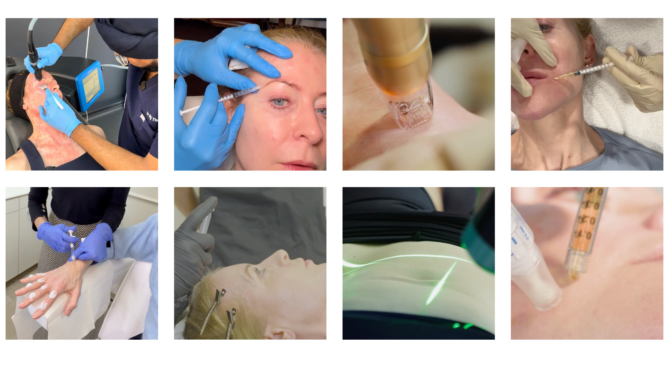
As with most concerns, the cost of treating crepey skin depends on your treatment of choice and the number of sessions you decide to have. Skincare for example can be very affordable, with creams for around £10 (although they do also run into the hundreds), while injectable treatments such as polynucleotides and radiofrequency start from £350 and laser therapies from around £500 per treatment.